PARTNER ECOSYSTEM OVERSIGHT
Know where partner investment will create the greatest value.
Revenue, pipeline and activity tell you what has happened. They do not always tell you which relationships deserve more investment, which need attention and which no longer justify the resources committed to them.
The Oversight Gap is a standardised system built to provide greater visibility across your partner ecosystem by bringing the relevant evidence and perspectives into one comparable view.
So you can make better decisions about where to invest, improve, intervene, maintain or reconsider.
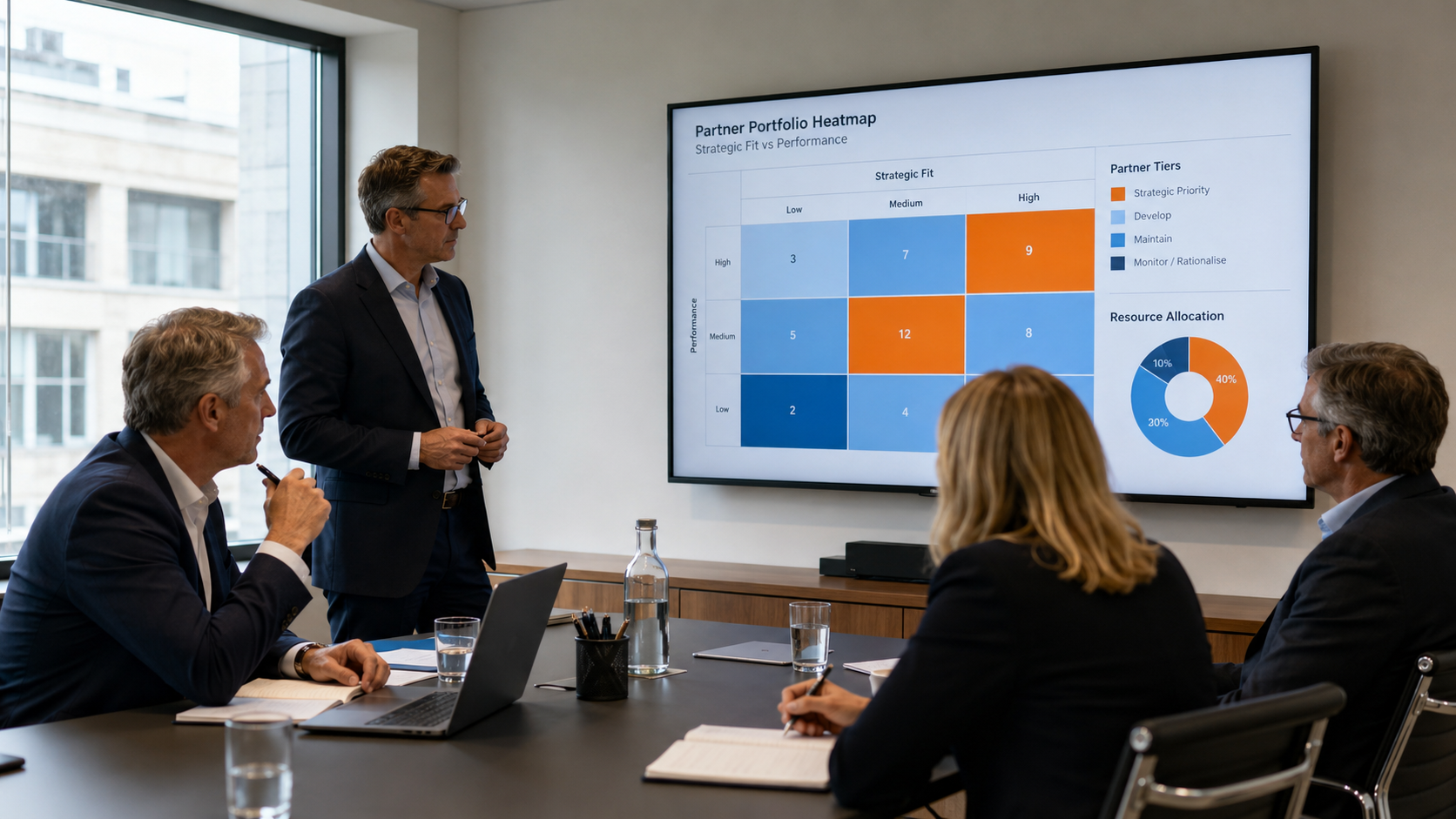
Different relationships require different decisions
The objective is not to improve every relationship, it is to understand what each one warrants.
Invest
Back relationships with the strongest combination of alignment, capability and opportunity.
Improve
Identify what is preventing a relationship from delivering against its potential.
Intervene
Act where changes in commitment, alignment or direction require attention.
Maintain
Confirm that the current level of support remains appropriate.
Reconsider
Reduce attention or investment where the evidence no longer supports it.
Reassess
Return to the same evidence later and establish what changed.
Better decisions depend on seeing more than performance.
Most organisations already know what their partners have sold, what pipeline exists and how much activity has taken place.
What is harder to see is why relationships are performing differently, whether both sides see the position in the same way, where potential is being constrained and whether resources are still aligned with the best opportunities.
That is the visibility The Oversight Gap creates.
See what the portfolio is telling you
Most organisations know their largest partners well.
The harder decisions often sit across the wider portfolio, where evidence is spread across reports, relationship owners, internal teams and the partners themselves.
A consistent view makes it easier to see where opportunity is being underused, where perspectives differ and where existing resources may be better directed.
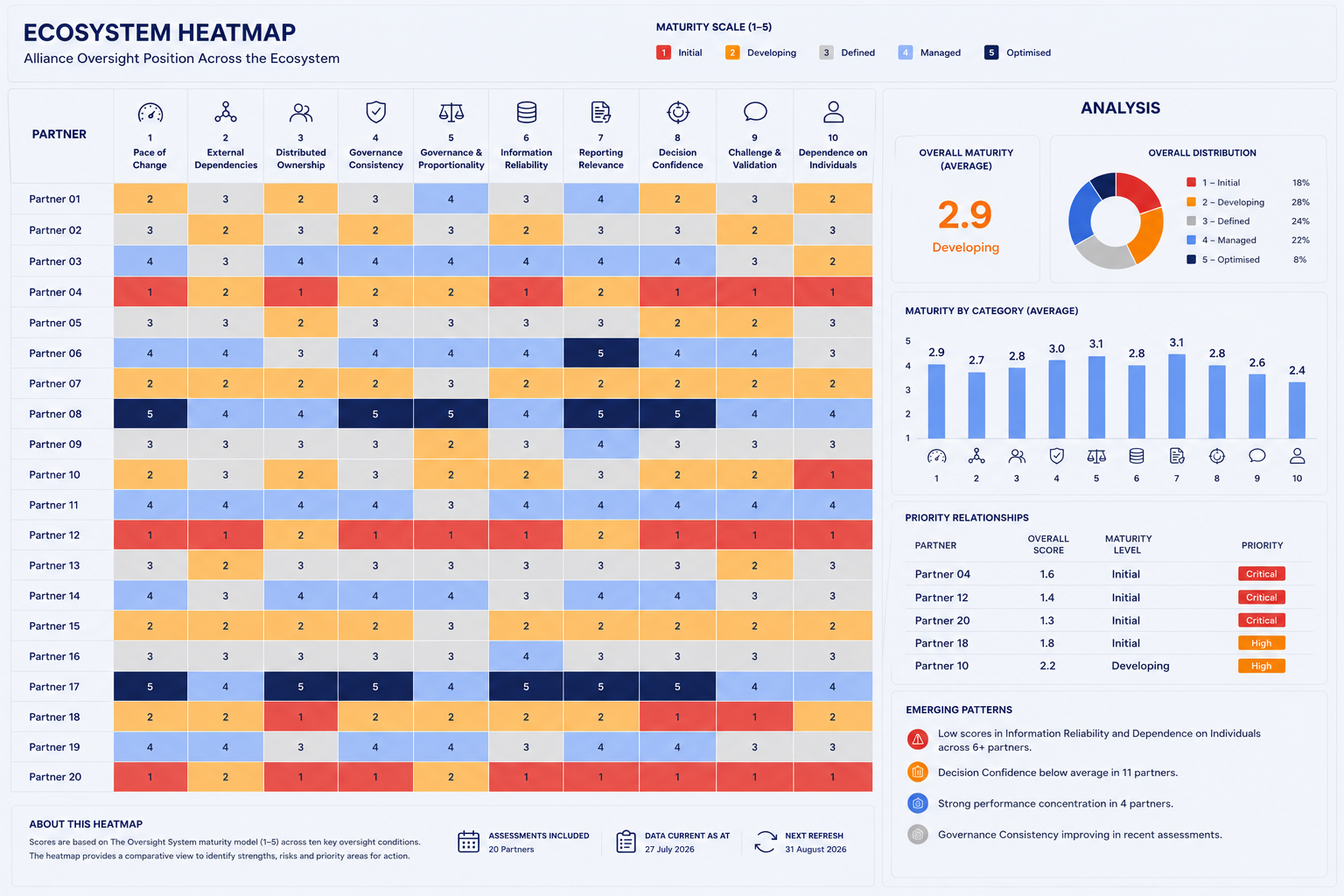
The heatmap turns individual relationship evidence into a portfolio view, making patterns, differences and priority areas easier to see.
Start with the decision, not the assessment.
You may be deciding where to increase partner investment, why performance is uneven, whether an important relationship still warrants its current level of attention or where limited resources should move next.
That question determines what needs to be examined.
From question to a clearer position
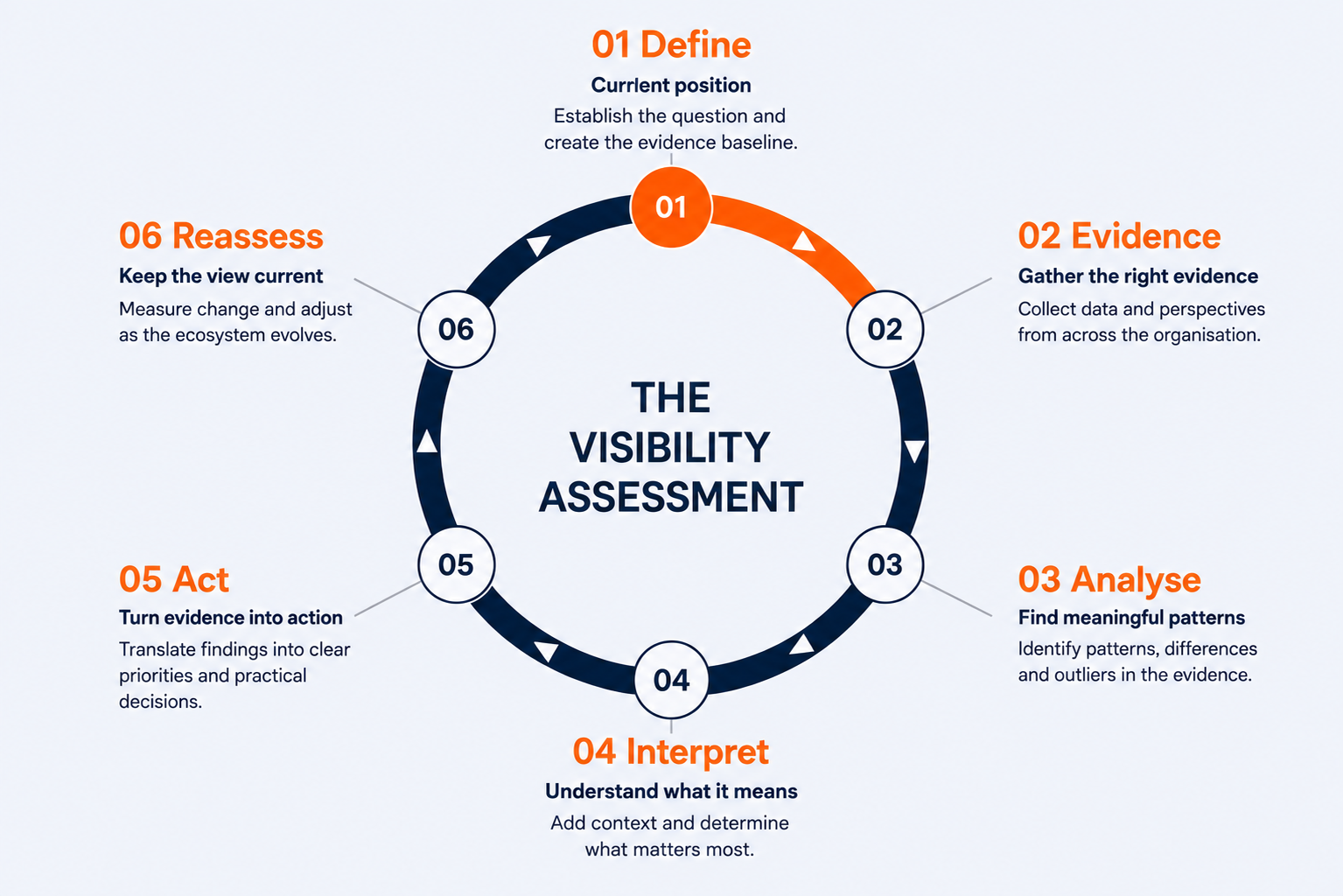
We define the decision, establish what evidence and perspectives are relevant and bring them together on a consistent basis.
AI-supported analysis identifies patterns, differences and outliers across the relationships being examined.
Experienced interpretation establishes what those findings mean in their strategic and commercial context.
The outcome is a clearer position from which to decide what happens next.
What this can change
A technology distributor wanted to understand where its existing channel resources would generate the greatest return.
Revenue and activity reporting showed what partners were producing, but it did not show whether current support was aligned with future potential.
A comparable view across the channel showed that resources were not always concentrated on the strongest opportunities.
Management redirected attention towards higher-potential relationships, reduced unnecessary activity elsewhere and introduced six-month reassessment to track whether those decisions continued to hold.
The immediate return came from using existing resources better, not simply spending more.
What partner decision are you trying to make?
It may concern one important relationship, a selected group of partners or the wider ecosystem.
You do not need to define the assessment before getting in touch. Start with the decision and we can establish what evidence would help and whether a broader view is justified.
Not sure if there could be something worth a closer look?
You may not have a specific partner problem or decision in mind. You may simply sense that something across the ecosystem is not as clear, aligned or well evidenced as it should be.
The complimentary Visibility Snapshot is designed for that point.
In around ten minutes, it gives you an initial view across five areas that influence the quality of partner decisions, including change, evidence, alignment, decision-making and warning signals.
Your personalised report shows where the current approach appears well supported, where the picture may be less complete and which areas may justify a closer look.
It is not a full assessment. It is a simple way to establish whether there is anything worth examining further, and where to start if there is.
18 questions | Around 10 minutes | Personalised report | Delivered immediately